Security operations platform
Automation for workforce control, verification, and real-time operational management.
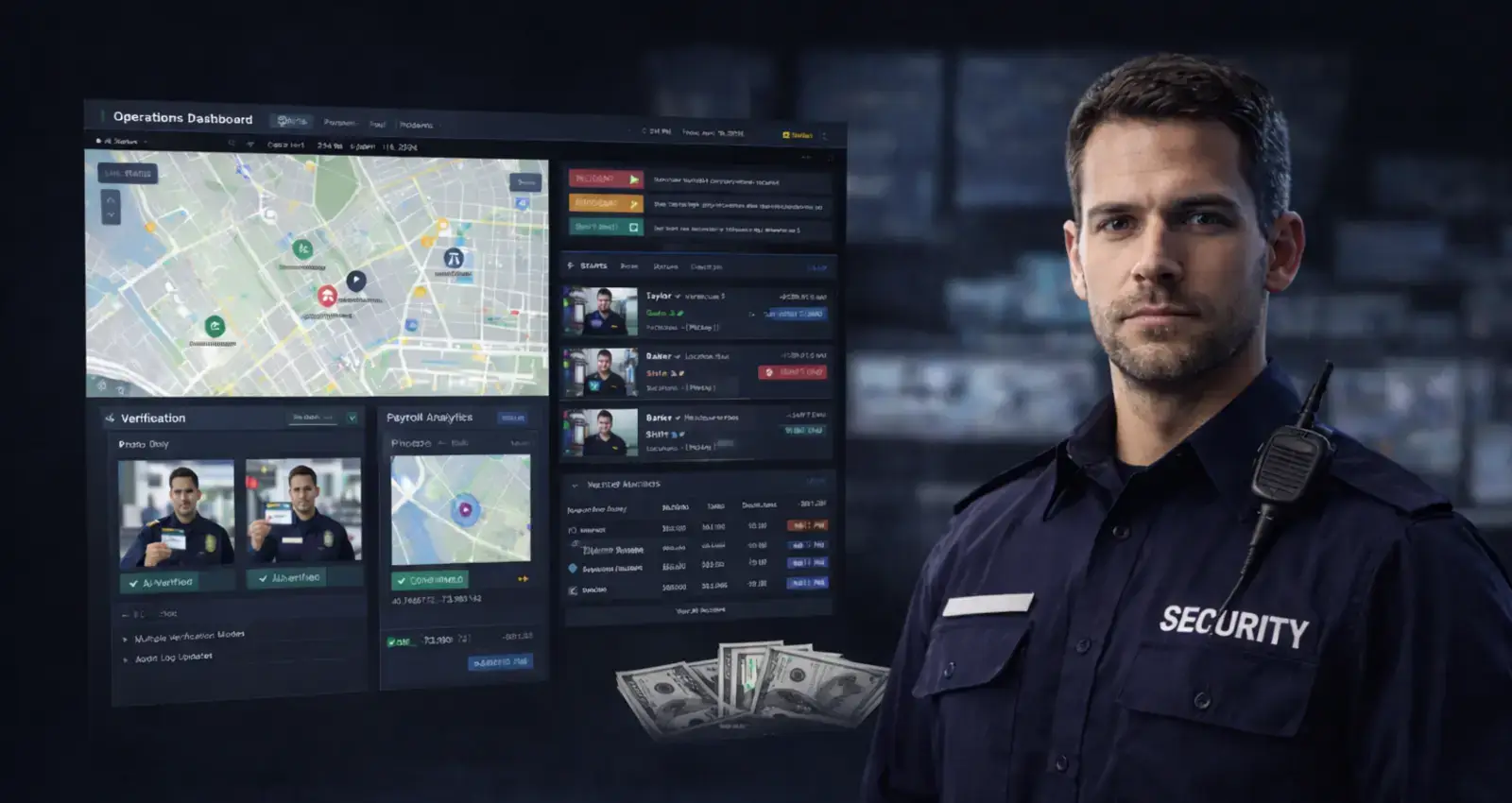
Security agencies needed reliable control over guard attendance and on-site presence, but manual checks and reports were slow, inconsistent, and hard to verify.
We built a unified operations platform combining shift planning, GPS monitoring, automated verification, real-time communication, and structured reporting.
Agencies gained continuous visibility into field operations, faster incident response, and trustworthy data for payroll, compliance, and decision-making.
What the platform delivered
Core capabilities required for large-scale security operations.
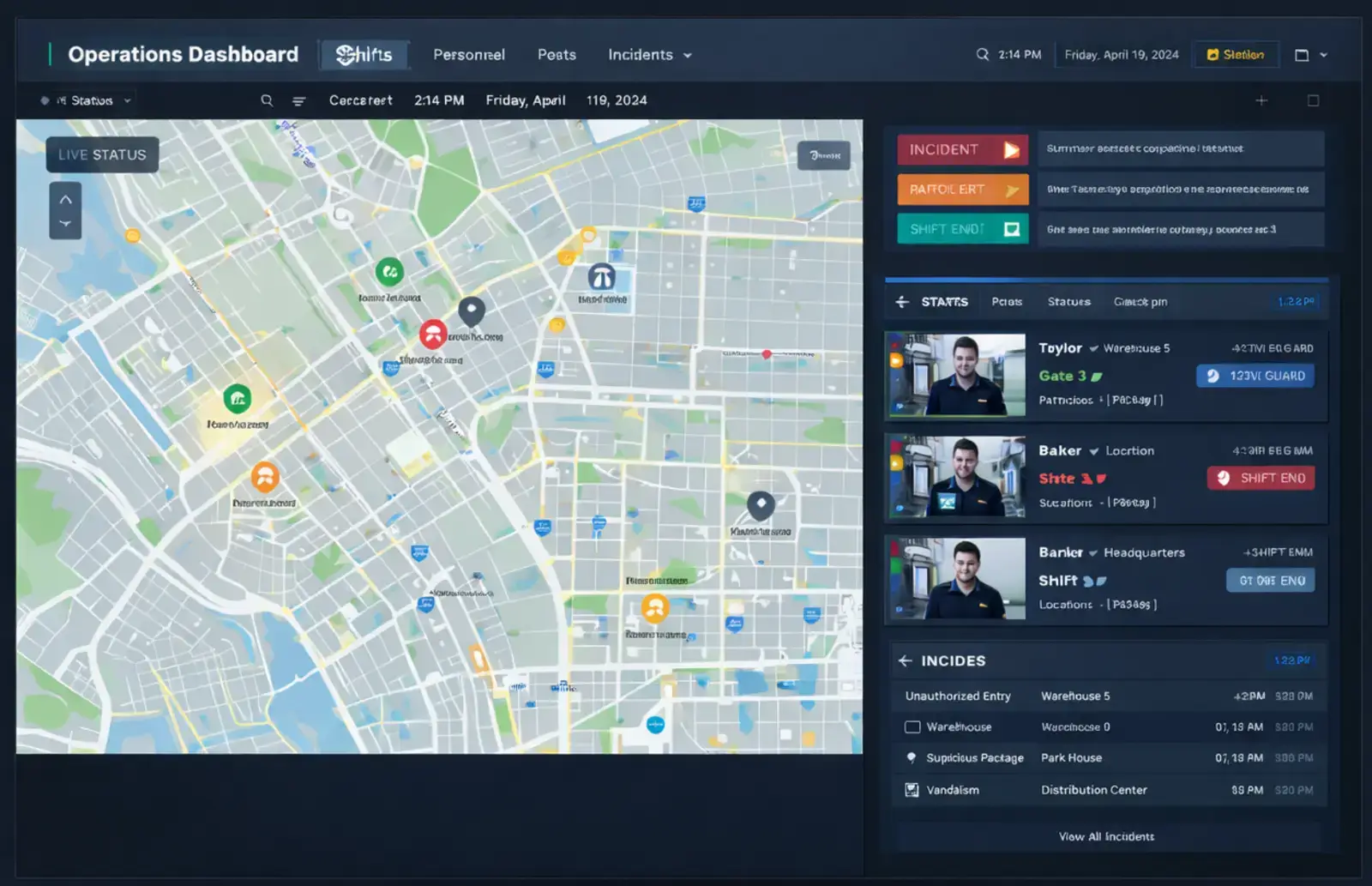
Scheduling, check-ins, replacements, and control of guard availability.
Continuous tracking to ensure guards remain at assigned locations.
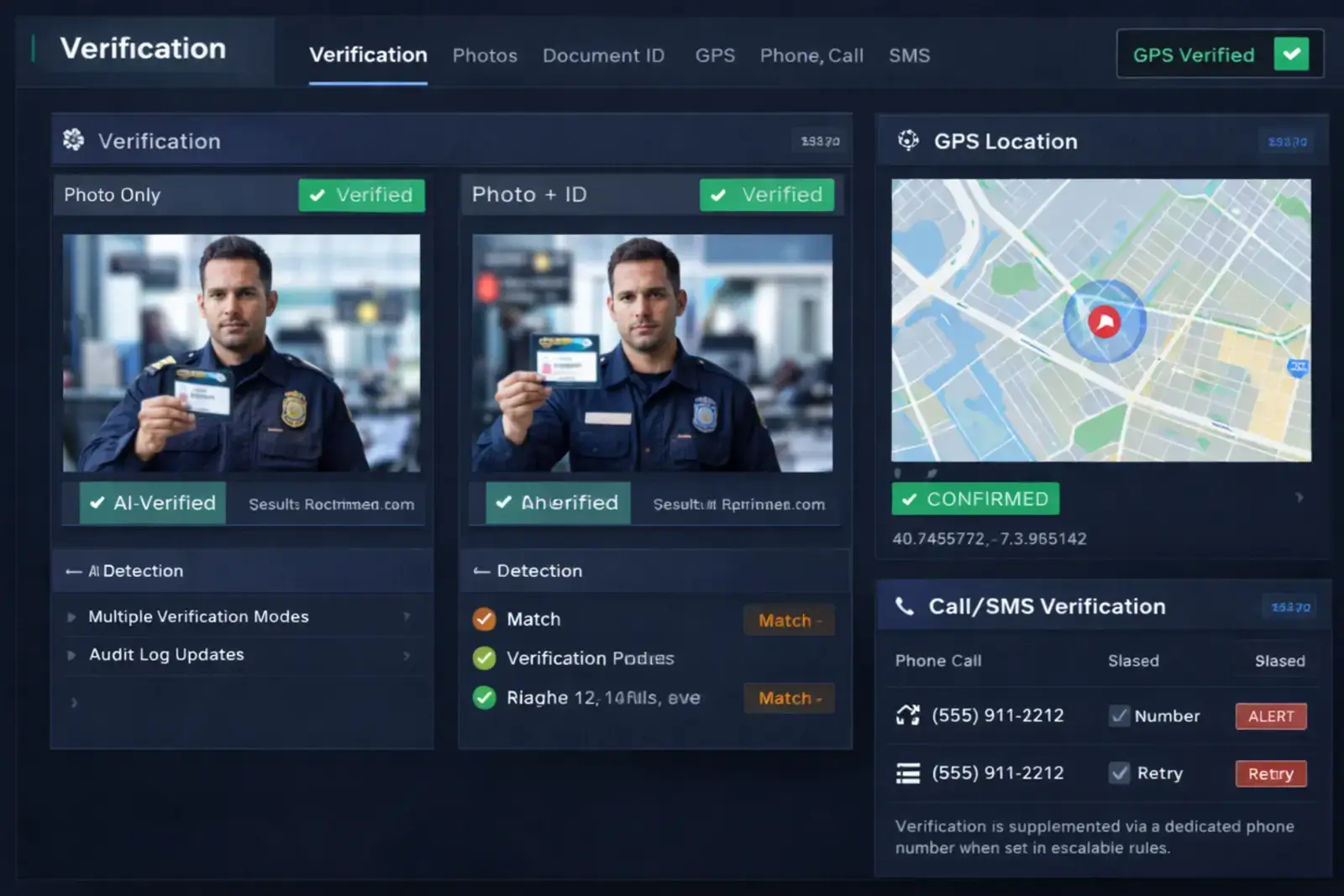
Automated checks using photos of a person or a person with a document.
Tag-based verification and automation using NFC tags, QR codes, and camera scanning.
Instant messages and notifications between the server and users across the system.
Multi-level permissions for guards, supervisors, and administrators.
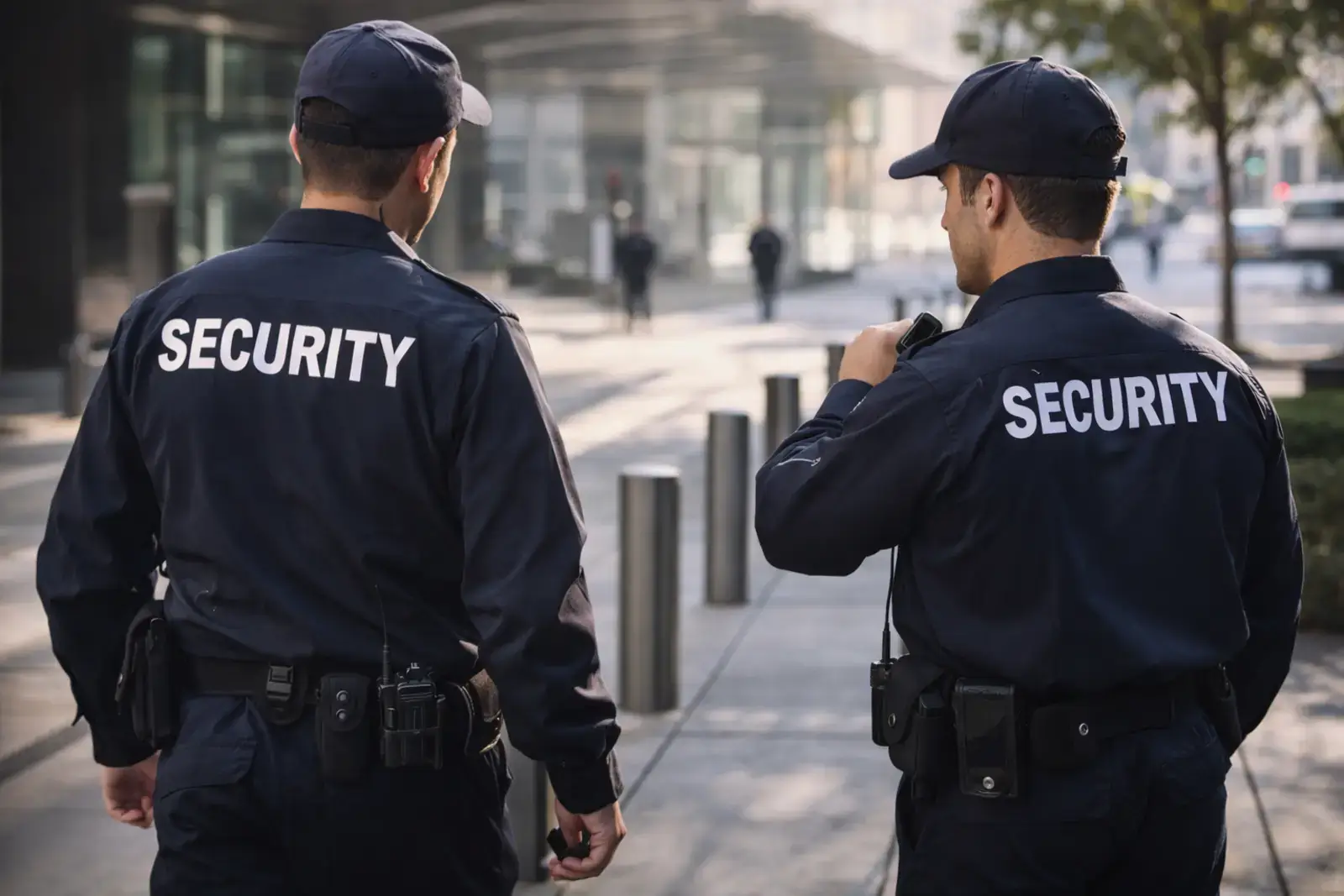
Operational environment
Representative visuals of field work, supervision, and control workflows.


How delivery was organized
A practical approach to systems with strict operational requirements.
Study real guard workflows, verification rules, and reporting needs.
Define AI checks, GPS rules, NFC/QR flows, and escalation paths.
Roll out features in stages with feedback from field operations.
Improve reliability, reporting accuracy, and payroll calculations.
Business impact
Typical outcomes for automated security operations.
Clear visibility into attendance, presence, and field activity.
Incidents and reports are captured and processed without delay.
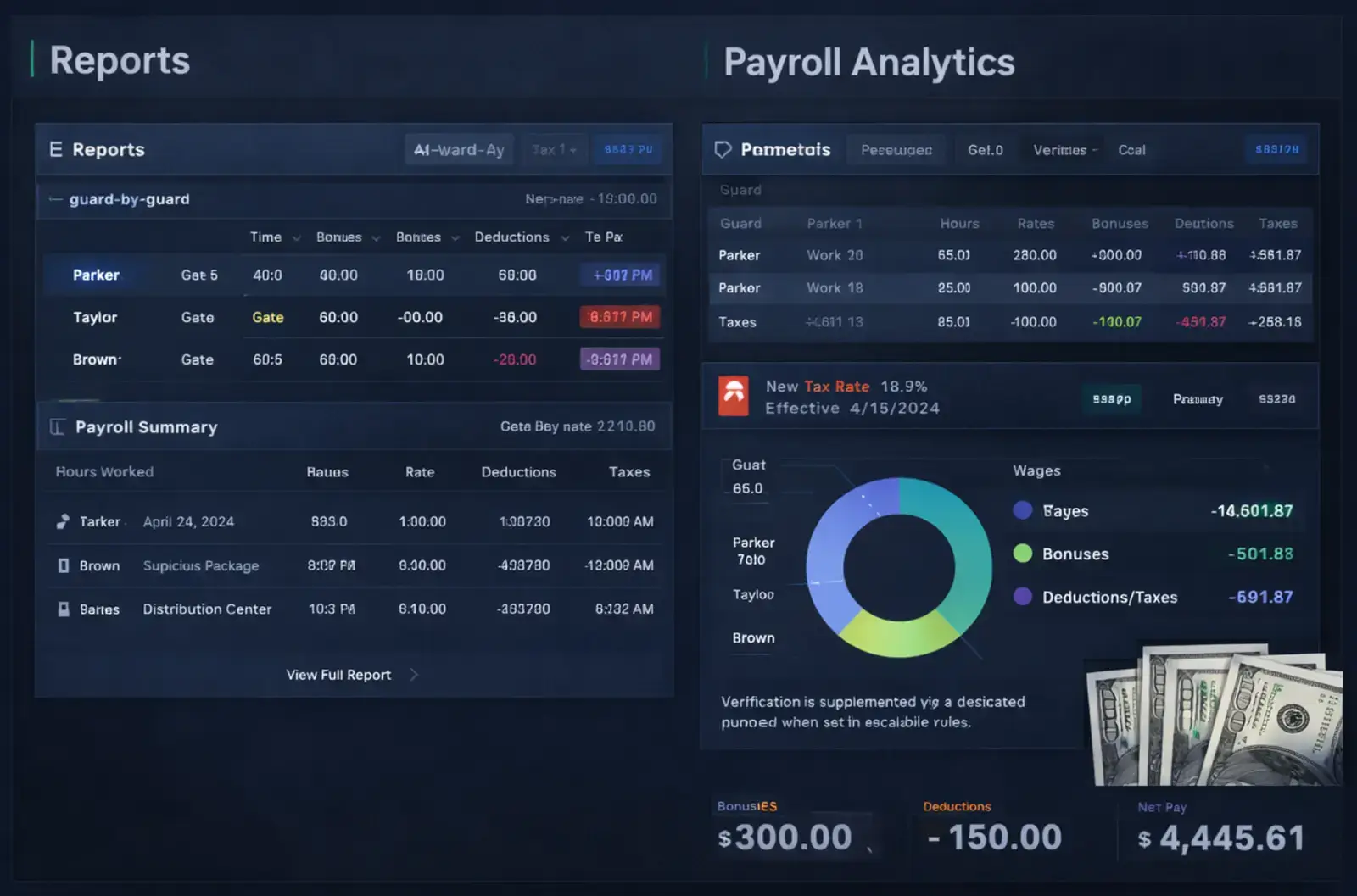
Salary calculations reflect shifts, bonuses, deductions, and taxes.
Audit-ready records reduce disputes and operational risk.
Platform interface examples
Representative UI screens used by operators, supervisors, and administrators.
Scope highlights
Key modules delivered as part of the platform.
Common questions
Key clarifications for operational teams.
Verification combines GPS presence, AI-based photo checks, and optional calls or SMS depending on the scenario.
Yes. NFC tags, QR codes, and camera-based scanning are used to automate routine checks and confirmations.