Carrier integration API
A high-load integration layer for global carriers with predictable performance and operational visibility.
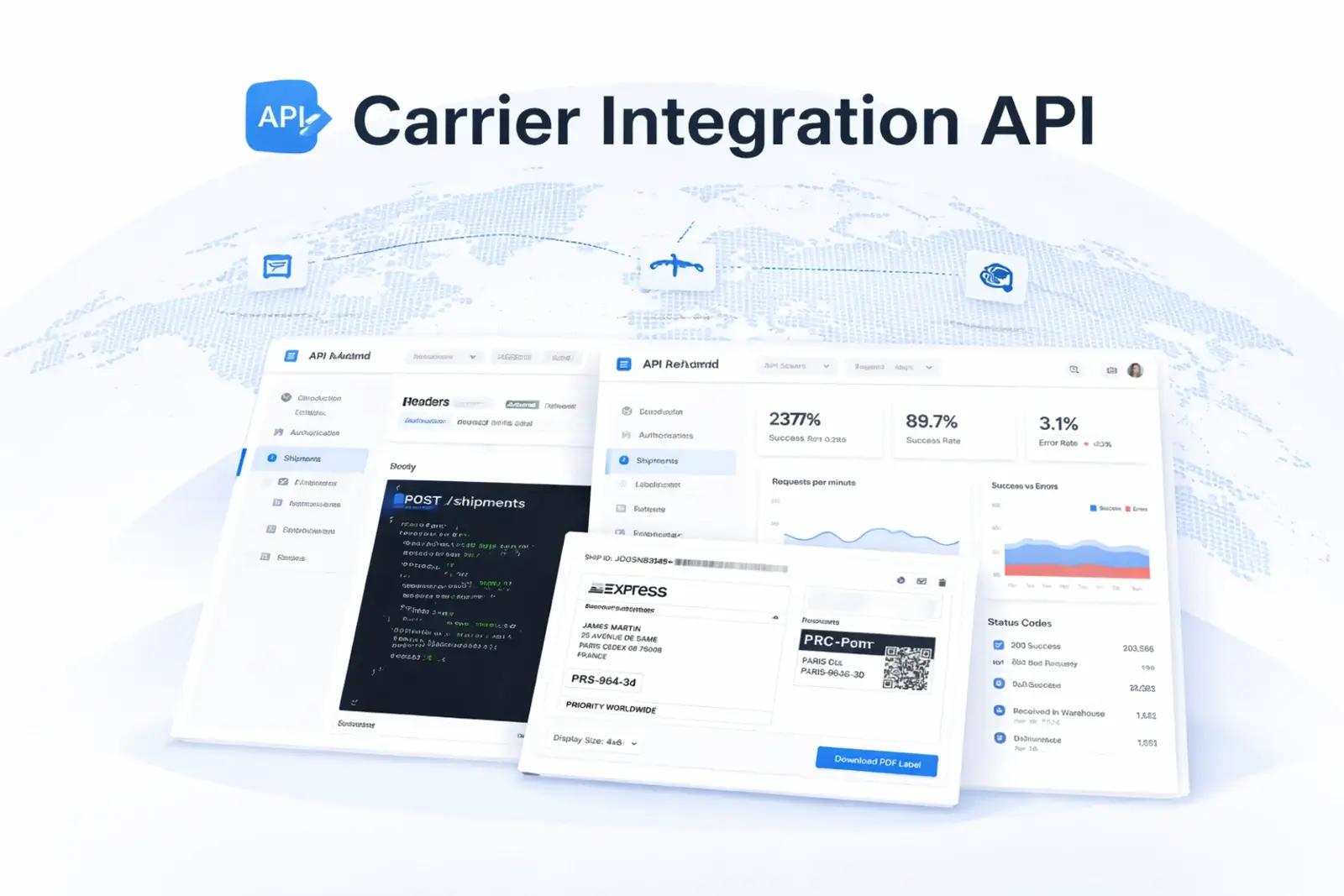
Carrier integrations differed by region and protocol, making them fragile, hard to monitor, and expensive to support at scale.
We built a unified integration layer with consistent API contracts, validation, retries, and tooling for operations and support.
Integrations became stable and predictable, new carriers were onboarded faster, and operational incidents were significantly reduced.
What the platform delivered
Core capabilities required for stable carrier integrations.
Single, consistent interface over multiple carrier protocols and providers.
Strict input validation, predictable errors, and defensive integration patterns.
Graceful handling of carrier downtime and transient failures.
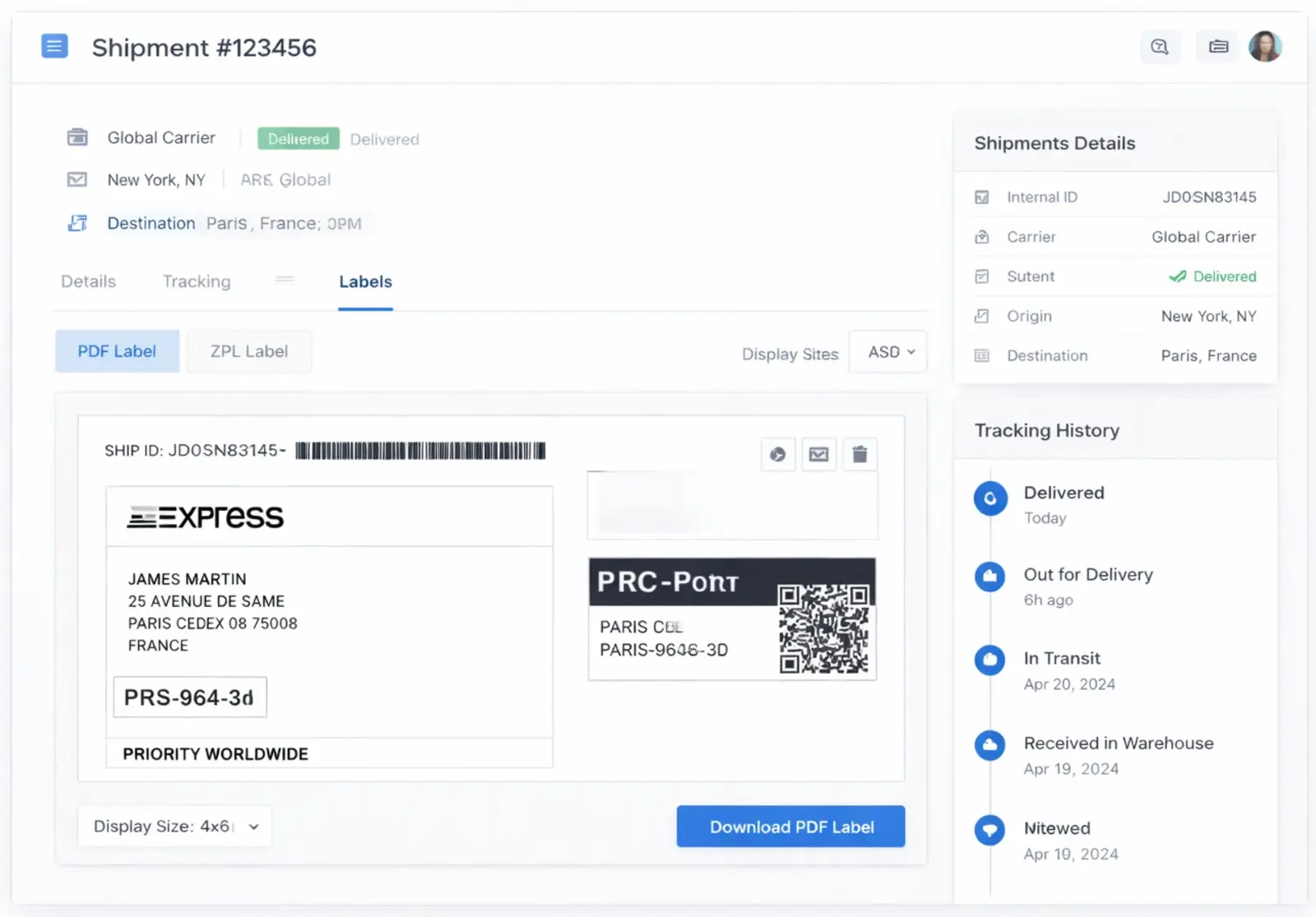
PDF and ZPL generation for shipping labels and carrier documents.
Detailed logs, metrics, and tooling for support and operations.
Designed to handle sustained traffic and peak loads up to hundreds of requests per second.
Operational context
Representative visuals of integration work and supporting infrastructure.



How delivery was organized
A pragmatic approach to complex, high-load integrations.
Identify carriers, regions, protocols, and supported logistics scenarios.
Define API contracts, edge cases, and failure modes upfront.
Implement integrations step by step with testing and monitoring.
Tune performance, improve observability, and support live operations.
Operational results
Typical outcomes for platforms of this scope.
Consistent error handling reduced operational surprises.
New integrations added quicker with reusable contracts.
The system handled peak traffic of up to ~600 requests per second.
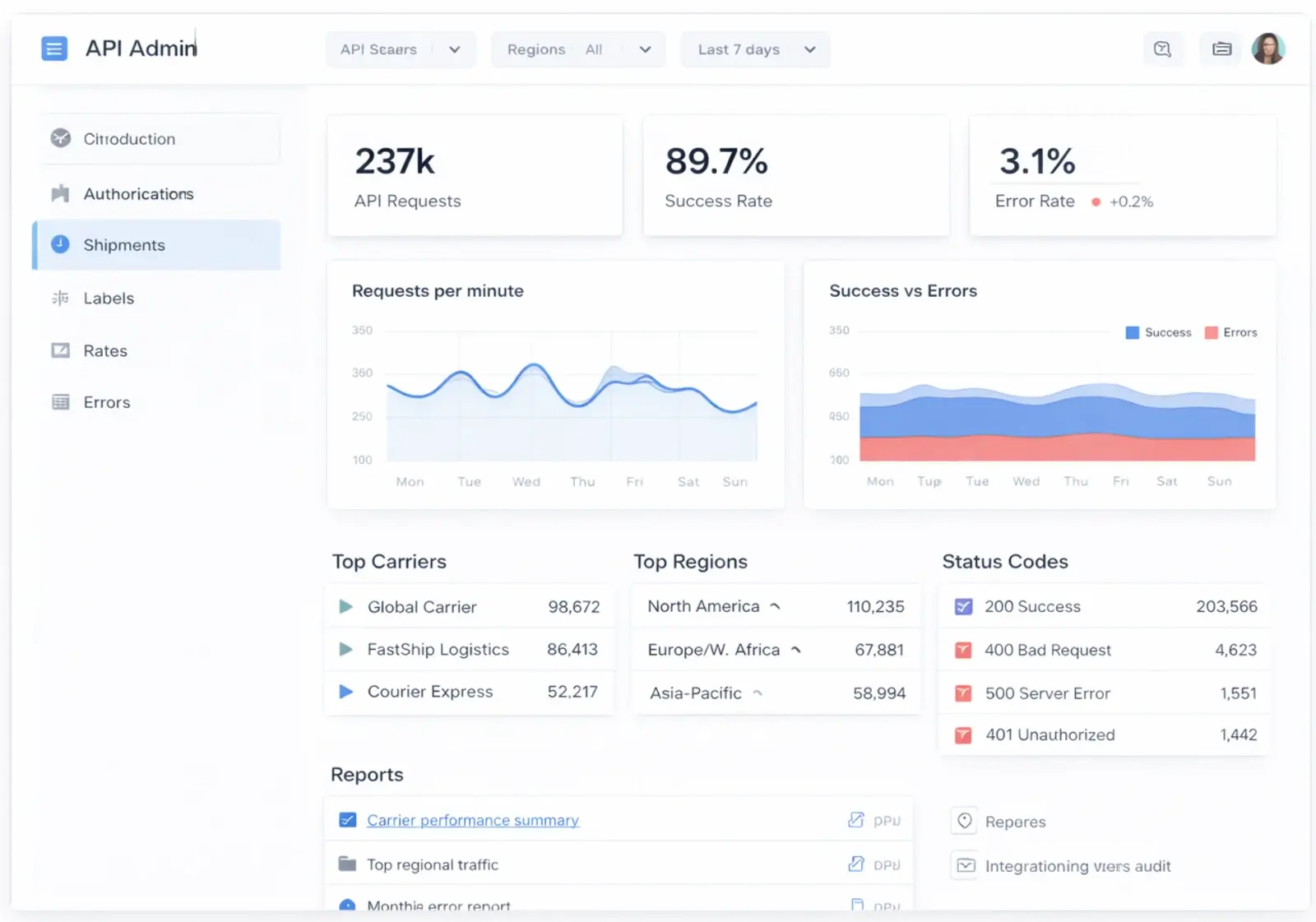
Support teams gained clear insight into requests and failures.
Platform interface examples
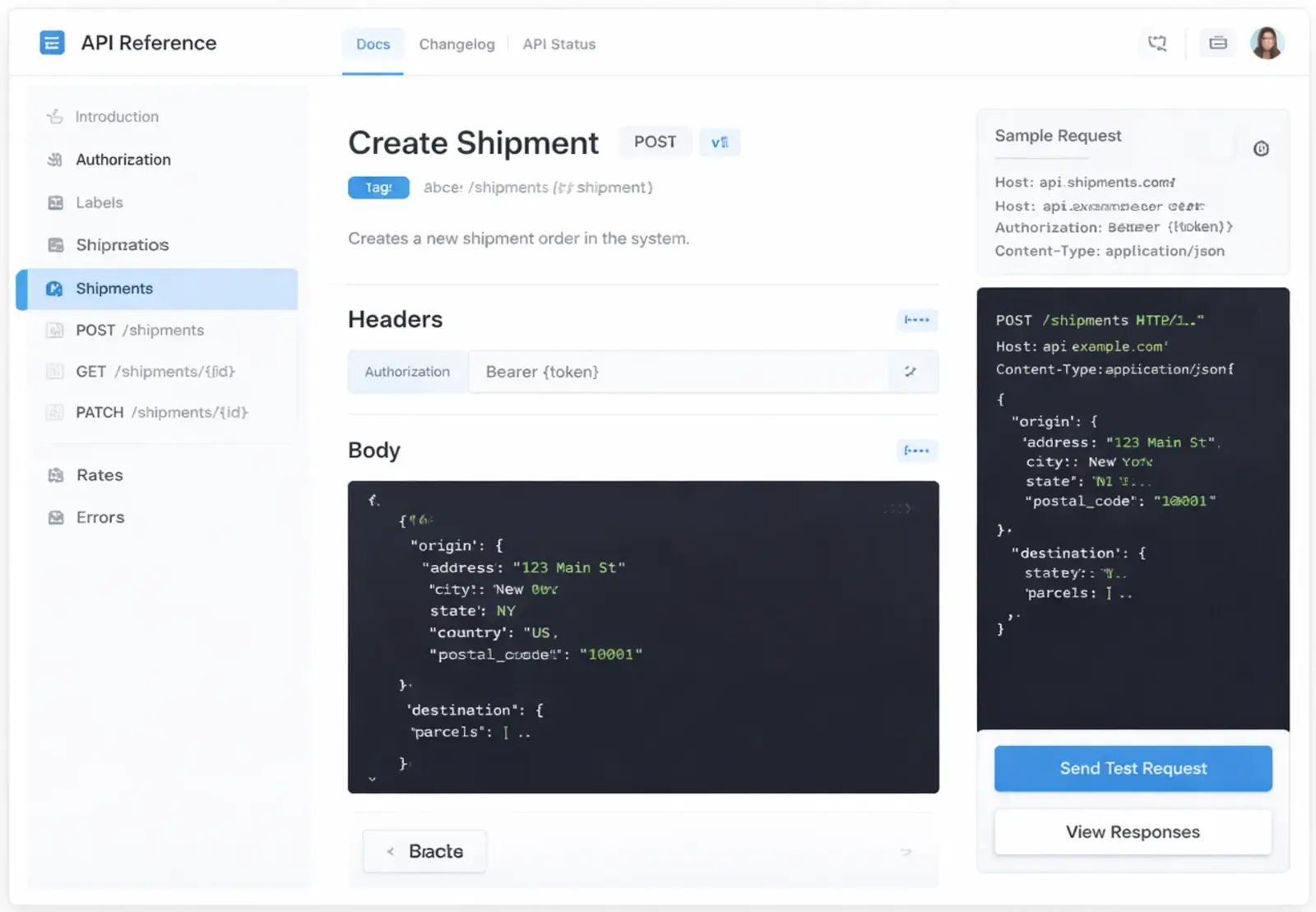
Representative UI screens: documentation, admin tools, and shipment details.
Scope highlights
Key areas covered by the platform.
Common questions
Clarifying expectations before integration.
No. It was designed to integrate carriers worldwide using different protocols and standards.
Yes. The platform was built and operated under sustained high load with predictable performance.
In many cases we can’t share real screenshots or client names due to confidentiality. We provide representative UI examples and focus on outcomes and delivered capabilities.